

Start A Budget From Scratch
There’s usually a moment. Not dramatic. Not announced. Just… sharp.
Maybe it hits you standing at the checkout, the beep of the scanner still going, when your card doesn’t go through and you laugh it off like it’s nothing. Maybe it’s later, at home, staring at a stack of unopened bills because your body already knows what your eyes don’t want to see.
That’s often where things start to shift. Not with a plan or a spreadsheet. Just with that quiet, uncomfortable pause where you realise something has to change.Or perhaps it’s that quiet moment late at night when you whisper to yourself, “I can’t keep living like this.”
Whatever brought you here, I’m glad you made it. Starting a budget from scratch isn’t about depriving yourself or being strict. It’s about taking back control and swapping chaos and stress for structure and clarity.
If budgeting has felt complicated before, it’s because the world has made it that way. Apps packed with endless categories. Apps stuffed with endless categories. Self-proclaimed financial gurus proclaim rigid methodologies as if they represent the sole avenues for achieving financial success. Navigating personal finances can be as complicated as flying an airplane, with a lot of moving parts to consider. It’s no wonder that many people feel overwhelmed and discouraged before they even start managing their money.
However, the reality is:
You can create a fully working budget in under 30 minutes, without stress, jargon, or spreadsheets that make your eyes bleed.
In this guide, I’ll walk you step by step through a simple, human approach to budgeting, built for real life, not a perfect Pinterest version. By the end, you’ll have a budget, a system, a plan, and hopefully a bit more confidence.
Why Most People Fail at Budgeting (And Why It’s Not Your Fault)
Let’s start with a confession: most people don’t fail at budgeting because they’re irresponsible, lazy, or “bad with money.” They fail because the traditional budgeting model was never designed for real humans. It was created for accountants.
There’s this strange expectation that budgeting should come naturally, the same way tying your shoes or brushing your teeth does. But the truth is, budgeting is a learned skill. No one comes out of the womb knowing how to organise their income, expenses, fixed bills, variable bills, and financial goals. And yet we beat ourselves up when we struggle.
Most budgets collapse for three predictable reasons:
- No Clarity
You can’t organise what you can’t see. Yet people try all the time. Creating budgets without truly understanding their expenses or the real costs of their bills. It’s more like making educated guesses instead of having a solid plan. It’s like trying to complete a jigsaw puzzle when half the pieces are still in the box or stuck under the couch.
- No System:
Then there’s the second problem. No system.
A budget doesn’t survive on good intentions. It runs on habits. Which accounts you use. How you track spending. When you sit down to look at the numbers. Miss that structure and even a “perfect” budget starts to wobble, then unravel.
Because without a system, nothing holds. And eventually, everything slips.
- No Review Process
Here’s something no one tells you: your first budget will be wrong. Your second one will be wrong as well. Budgets become accurate through adjustment, not perfection.
The good news?
Once you understand these three truths, budgeting gets much easier. It won’t be perfect or flawless, but it will feel calmer and much more manageable.
So, let’s build your budget from the ground up, the way real people actually live.

Step 1 — Get Your Financial Snapshot (Your Starting Point)
Imagine you want to start getting fit. You wouldn’t choose a workout plan without knowing your starting condition. You’d figure out your current fitness level, strengths, limitations, and goals.
Budgeting works the same way.
Before you make any plan, you need a clear, honest picture of where your money is right now. Not where you wish it were or hope it will be, just the facts.
- List Your Monthly Income
Not your “average.” Not your “expected.”
Your real income.
If your monthly income changes a lot, take the smallest amount you earned in the last six months. Better to plan conservatively and be pleasantly surprised.
- List Your Recurring Bills (Fixed Expenses)
Grab bank statements or open your banking app.
Look for:
- Rent or mortgage
- Utilities
- Internet
- Phone
- Insurance
- Subscriptions
- Debt minimum payments
Write everything down—even the sneaky ones like Apple subscriptions or gym memberships you forgot existed.
- Track Your Spending for the Last 30 Days
If this makes you cringe, you are exactly who this step is for. There’s no judgment here. We’re gathering data, not shame.
Look at:
- Groceries
- Takeaways
- Coffee shops
- Petrol
- Eating out
- Random Amazon purchases
- Social activities
Every transaction tells a story. This is your chance to understand yours.
- Identify Your Money Leaks
We all have them.
It might be that daily takeaway you swear you “hardly ever get,” yet somehow it’s draining £120 a month.
Or a couple of subscriptions you forgot you even signed up for.
Or those small, impulsive spends that don’t feel like much in the moment… until they are.
This isn’t about beating yourself up.
It’s about noticing. Really noticing.
Because once you see where the money slips away, you can do something about it. That awareness—that quiet click of recognition—is where control actually begins.
Think of this snapshot as your starting line. The ground under your feet. Every smarter decision you make from here rests on this one thing: clear sight.

Step 2 — Choose the Budgeting Style That Fits Your Life
There is no “one perfect budgeting method.” Anyone who claims that hasn’t met enough humans.
Different people need different systems. Budgeting is like choosing shoes—the best pair is the one that fits you.
Here are the three most effective budgeting styles for beginners:
- The 50/30/20 Budget (Best for Most Beginners)
This one keeps things simple. Almost reassuringly so.
Roughly half your money covers the basics. Rent, bills, food, transport. The things you can’t really avoid. About thirty percent goes to the fun stuff. Eating out, small treats, life as you actually live it. The final slice—twenty percent—gets pointed toward savings or chipping away at debt.
No micromanaging. No logging every coffee or arguing with yourself over a sandwich you had yesterday lunchtime. You’re just steering your spending into a few wide lanes and checking you’re still on the road.
If budgeting has ever made you tense, guilty, or quietly rebellious… this is a good way back in.
2. Zero-Based Budgeting (For when you want full control)
This one doesn’t leave anything floating.
Every pound of your money has a job to do. You decide where it goes—like for bills, groceries, savings, and paying off debt. At the end of the month, what you earn minus what you planned to spend should equal zero. This doesn’t mean you’ve run out of money. It means you’ve planned where each part of your money should go.
This approach is especially helpful if you have debt, if your spending feels random, or if your money seems to disappear without you knowing why.
Yes, it requires more effort. You will have to check your budget more often and think ahead about your spending. But this practice helps you become better at managing your money. Plus, many people find that knowing exactly where their money is going makes them feel more relaxed and in control.
- The 3-Category Budget (For Overwhelmed Beginners)
This is for people who say:
“I’m drowning. Just tell me what to do.”
Your categories:
- Bills
- Spending
- Saving/Debt
That’s it. Three buckets. Simple, effective, practical.
This method helps you get started quickly without complicating things. If budgeting makes you anxious, this is a good place to begin.
Which One Should You Choose?
Ask yourself:
- Do I want SIMPLE? → 50/30/20
- Do I want CONTROL? → Zero-Based
- Do I want EASY? → 3-Category
Pick one. It’s not permanent. You can switch later if needed.
Step 3 — Build Your First Budget (The Step-by-Step Formula)
This is the main part of the process. If budgeting feels overwhelming, people often move to Step 3 without ever doing Steps 1 and 2 first.
You are handling this correctly. This step will feel peaceful and organized.
Let’s walk through it.
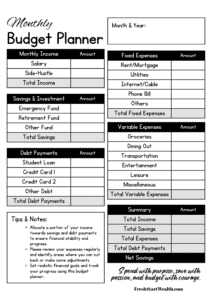
- Start With Your Fixed Bills
These are your non-negotiables.
Rent, utilities, insurance, subscriptions, and debt minimums.
Add them up.
This number tells you how much of your income is already spoken for.
Use the “Bill Calendar Method”:
Write down what gets paid on what day, to prevent the “oh no, I forgot about that bill” panic we all know too well.
- Add Your Variable Spending (Your Real-Life Money)
These are your flexible categories:
- Groceries
- Eating out
- Petrol
- Fun/entertainment
- Kids’ activities
- Personal spending
Look at your pay over the last 30 days to set realistic numbers. Don’t make a budget that expects you to cut your grocery bill in half suddenly. Budgets based on wishful thinking don’t work. That mirrors your actual life.
- Set Savings and Debt Goals
Make it even a little amount.
£10 each week.
£20 every month.
£5 in a jar.
What’s important is to do it often. A small, regular habit is better than a Good habits done from time to time:
- Emergency fund: Save money for unexpected expenses.
- Sinking funds: Save money for things like holidays, Christmas, or car repairs.
- Debt overpayments: Pay more than the regular amount on your debts.
- Investing: Put away even a small amount of money, like £10 or £20 each month.
- Do Your Budget Math
Income is what you earn. From that, subtract your fixed expenses (like rent or bills), variable expenses (like food or gas), and savings (money you keep for later).
Do you have extra money left? Great! Find a good place to put that money.
If you are short on money, try these steps:
– Cut back a little on some expenses
– Look for small ways you may be wasting money
– Try to do new things instead of your usual habits.
– Look at all your subscriptions and see if you really need them all.
– This can help you balance your money better!
Budgeting is not about being strict; it’s about finding balance.
- Include Extra Money and Round Your Numbers
– New budgeters need some extra help.
– Life can bring surprises.
– Set aside a little money for unexpected costs.
– Round your budget numbers to whole numbers.
– It’s okay to make mistakes.
– Remember, you are getting better, not harder on yourself.

Step 4 — Set Up Your Banking System (This Changes Everything)
A budget without a banking system is like a house without a foundation—it collapses the moment life happens.
The simplest, most powerful banking system for beginners is the 2-Account or 3-Account Method:
- Bills Account
All bills are paid from here.
Your bill money is protected and untouchable.
- Spending Account
This is your day-to-day life money.
You tap this, not your bill’s account.
- Savings Account (Optional but recommended)
Anything you’re intentionally saving goes here.
A simple structure like this prevents 90% of overspending. Most people overspend because everything is mixed—they can’t see what’s bill money vs. spending money.
This system gives you clarity, control, and calm.
Step 5 — Track Your Spending (The Simple Way)
I’m going to say something you rarely hear from financial experts:
You do not need to track every penny of spending to be successful.
You only need a method that:
- You’ll actually use
- Gives you enough information to stay on course
- Doesn’t overwhelm you
Here are the simplest tracking methods:
- Weekly Check-In: Once a week, check your spending categories. That’s it.
- “Write It Down” Method: Keep a small notebook or phone note.
Please write what you spend when you spend it.
- The Spreadsheet (Only If You Enjoy It): Some people love spreadsheets. If you do—great. If you don’t—ignore them.
- Simple Apps: Not fancy budgeting apps with graphs and dashboards. Just apps that show you your spending.
What NOT to Track
You don’t need to write down every small purchase like: “£2.50 for a snack,” “£4.10 for coffee,” or “£1.20 for gum.” This level of detail is too much.
Instead, focus on tracking larger categories, not every little expense.
Step 6 — Do Your Weekly Reset (Where Success Happens)
Effective financial management is all about maintaining a vigilant oversight of your budget.
Budgets don’t need to be perfect. They just need your attention. That’s the real trick. Stay close to them. Check in often.
Taking a few minutes each week to review your past week’s spendings, can really help. It keeps you in control and helps you avoid problems later. Find a quiet time and think about these simple questions:
- How much money did I spend this week?
- How much money do I have now, really?
- Do I need to change anything before it gets too difficult?
- What can I do better next week?
That simple habit matters more than most people realise. When you look at your budget regularly, surprises lose their power. You spot trouble earlier. You notice when money’s draining faster than expected. And you get the chance to course-correct while the problem is still small… manageable… fixable.
This is how budgets work in real life. They are not perfect, but somehow, they need your attention.
Checking your budget regularly is very important for a few key reasons:
– It helps you avoid sudden costs that could upset your money plans.
– It shows you if you are spending your money too quickly.
– It lets you make changes before small money problems turn into big ones.
– It ensures your budget remains a dynamic and beneficial tool, continuously guiding your spending and saving decisions.
Think of it as a “money tune-up.” A few minutes a week keeps everything running smoothly.

Step 7 — Adjust Your Budget Monthly (The Reality Check)
Your first month will be messy. Your second will be messy in a different way. That’s normal!
Budgets aren’t designed to be perfect—they’re designed to evolve.
Every month, ask:
- What worked?
- What didn’t?
- What surprised me?
- What do I need to increase or decrease?
- What did I forget to plan for?
Be prepared to make some mistakes along the way. Be ready to make changes as you learn.
Focus on making progress every week instead of trying to hit perfection all the time.
Think of a budget as a helpful guide rather than a strict exam. You can change it as you improve.
Common Budgeting Mistakes for Beginners (and How to Avoid Them).
When starting a budget, it’s easy to make some common mistakes. Knowing these can help you avoid frustration later on.
- Forget About Fun Money
If you spend all your money only on bills and savings, you will get tired of sticking to your budget. It’s important to save some money for fun activities. This way, you can enjoy life without feeling guilty.
- Underestimating Food Costs
Food can be tricky. Grocery shopping, eating out, and quick takeaways can add up quickly. Be realistic about how much you really spend on food each month. It’s better to plan for some extra costs than to think you can save more than you really can.
- Ignoring Predictable Surprises
Things like birthdays, holidays, and car repairs happen every year. They are not surprises if you plan for them. Set aside a little money each month for these events so that they don’t mess up your budget when they come.
- Expecting the First Month to Be Perfect
Your first month of budgeting won’t be perfect, and that’s okay! The important thing is to start. You can make changes later. Just showing up and trying to stick to your budget is what really matters.
- Check Your Budget Often
Just as a plant requires water for growth, your budget needs consistent assessments; check it frequently to monitor your progress. Consider these suggestions, and you’ll find yourself ahead of many individuals who are just starting out!
Success Tips From Financial Coaches
Here are some simple tips to help you manage your money better:
- The 24-Hour Rule: Wait a day before buying things you don’t need. This can help you avoid impulse buying.
- Replace Before Adding: If you want to buy something new, cut a similar expense from your budget. This way, you won’t spend more money overall.
- Use Cash Envelopes: If you often spend too much in certain areas, like groceries or dining out, try using cash envelopes. Put a set amount of cash in each envelope to limit what you spend.
- Automate Your Payments: Set up automatic payments and savings. This makes it easier to manage your money and helps you stick to your financial goals without remembering every detail.
Related articles:
How to Start a Budget from Scratch: The Complete Beginner’s Guide
How to Stop Living Paycheck-to-Paycheck (A Beginner Action Plan)
An Awesome Guide To Rebuild Fantastic Financial Life For Beginners
Top 10 Budgeting Mistakes And How To Fix Them
How to Start Investing for Beginners (Starting With Just £10)
Conclusion — Starting Your Financial Change
You’re not starting from nothing. You’re building on what you already have. This isn’t about rigid rules or living on spreadsheets. It’s about creating a system that fits your life—one you can stick with, adjust, and grow into over time.
Now you have a good foundation for your financial future, an approach that is not about strict budgeting; it’s a flexible strategy that works for you.
Remember this:
– A budget helps you see your money clearly.
– A budget gives you confidence.
– A budget is a chance to start fresh.
You don’t need to be perfect.
You don’t need expensive tools.
What you need is to keep trying and to be consistent, even when things get a little messy.
About the Author
Francis has a strong background in financial services with a mix of skills and knowledge that has helped many people achieve good results. He worked for five years as a financial consultant at a top insurance and financial services company in the UK. During that time, he successfully helped both individual clients and businesses make informed financial decisions. Along with his consulting experience, he has over 35 years of general management experience in different business settings. During this time, he has successfully led teams and created strategic initiatives, and navigated the complexities of achieving sustainable success amid competitive pressures. Through his writing, which draws on many years of real-life experience, he emphasises the importance of transparent financial communication. He emphasises the value of planning for the future rather than just seeking quick rewards, and encourages making economic choices that promote independence and security.
How to Start a Budget from Scratch: The Complete Beginner’s Guide
Leave a Reply